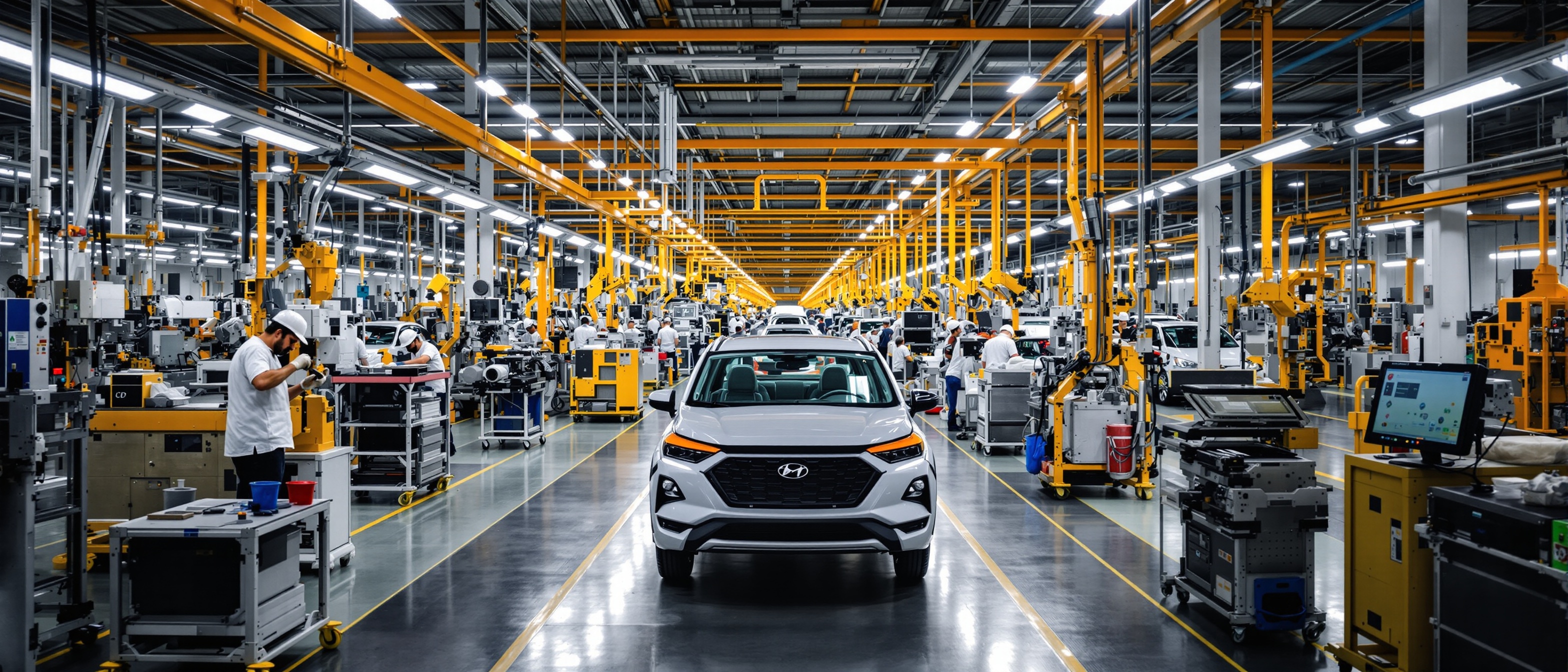
In a significant development for Ciudad Juarez's manufacturing sector, the United States and Mexico jointly announced on February 3, 2026, a comprehensive course of remediation regarding the Akwel Juárez México facility and several other major changes to bilateral trade arrangements. The announcement, which came after months of negotiations between trade representatives from both nations, signals a new chapter in the complex relationship between North American trading partners and has immediate implications for thousands of workers in the Juarez maquiladora industry.
Understanding the Akwel Situation
Akwel, the French automotive supplier formerly known as MGI Coutier, operates a significant manufacturing presence in Ciudad Juarez, producing fluid management systems, mechanisms, and other components for major automotive manufacturers. The company's Juarez facility has been a cornerstone of the local maquiladora industry, employing thousands of workers and contributing substantially to the regional economy.
The remediation announcement addresses concerns that had been raised regarding labor practices, environmental compliance, and adherence to the labor provisions of the United States-Mexico-Canada Agreement (USMCA). Under the agreement's Rapid Response Labor Mechanism, complaints can be filed regarding facilities that allegedly deny workers their rights to freedom of association and collective bargaining.
According to officials from both governments, the remediation course includes specific commitments from Akwel to address identified issues, enhanced monitoring mechanisms, and a timeline for demonstrating compliance. The agreement represents a negotiated resolution that avoids more severe trade penalties while establishing clear expectations for the facility's operations going forward.
Thousands of Juarez workers are affected by the trade remediation agreement
Broader Trade Changes Announced
Beyond the specific Akwel remediation, the February 3rd announcement included several other significant changes to US-Mexico trade arrangements that will affect the Juarez manufacturing sector. These changes reflect ongoing efforts to balance free trade principles with labor and environmental protections, while also addressing concerns about supply chain security and regional economic development.
One major component involves enhanced verification procedures for rules of origin compliance in the automotive sector. Under the new arrangements, facilities in Juarez and throughout Mexico will face more rigorous documentation requirements to demonstrate that products qualify for preferential tariff treatment under USMCA. While these requirements add administrative burden, officials argue they are necessary to ensure the agreement's benefits flow to legitimate North American production.
The announcement also included provisions for expanded cooperation on workforce development and training programs. Both governments committed to investing in initiatives that will help Mexican workers develop skills needed for higher-value manufacturing activities, potentially creating pathways to better-paying positions within the maquiladora industry.
Environmental provisions featured prominently in the announcement as well. New monitoring and reporting requirements will apply to manufacturing facilities in border regions, with particular attention to air quality, water usage, and hazardous waste management. These provisions respond to longstanding concerns about environmental impacts of industrial activity in the border zone.
Impact on Juarez Workers and Economy
For the hundreds of thousands of Juarez residents who work in the maquiladora industry, the trade remediation announcement carries both opportunities and uncertainties. Labor advocates have generally welcomed the enhanced protections and monitoring mechanisms, arguing that they will help ensure workers receive fair treatment and can exercise their rights without fear of retaliation.
At the Akwel facility specifically, workers will see concrete changes in how the company handles union representation, grievance procedures, and workplace safety. The remediation agreement includes provisions for independent monitoring and regular reporting on compliance with labor standards. Workers who have previously faced obstacles to organizing will have new avenues for addressing concerns.
However, some business leaders and economic analysts have expressed concerns about the cumulative impact of enhanced compliance requirements on the competitiveness of Juarez manufacturing. They argue that while individual provisions may be reasonable, the aggregate effect of multiple new requirements could increase costs and administrative burdens in ways that make Mexican production less attractive compared to alternatives.
Trade officials from both nations worked for months to reach the remediation agreement
The USMCA Context
The February 2026 announcement must be understood within the broader context of the United States-Mexico-Canada Agreement, which replaced NAFTA in 2020. USMCA included significantly stronger labor and environmental provisions than its predecessor, along with mechanisms for enforcement that have proven more robust than many observers initially expected.
The Rapid Response Labor Mechanism, in particular, has emerged as a powerful tool for addressing labor rights concerns at specific facilities. Since USMCA's implementation, multiple cases have been filed under this mechanism, resulting in remediation agreements, facility inspections, and in some cases, denial of preferential tariff treatment for non-compliant producers.
For Juarez, which hosts one of the largest concentrations of maquiladora facilities in Mexico, the active enforcement of USMCA labor provisions has significant implications. The city's manufacturing sector has had to adapt to new expectations regarding worker rights, union representation, and workplace conditions. While this transition has created challenges, it has also contributed to improvements in working conditions for many employees.
The Akwel case represents one of the higher-profile applications of USMCA enforcement mechanisms to a Juarez facility. The resolution through negotiated remediation rather than punitive tariffs demonstrates that the agreement's enforcement provisions can produce constructive outcomes when both governments and companies engage in good faith.
Industry Response and Adaptation
The maquiladora industry in Juarez has been adapting to the evolving trade environment, with many companies proactively strengthening their compliance programs to avoid becoming targets of enforcement actions. Industry associations have developed resources and training programs to help member companies understand and meet their obligations under USMCA.
Some companies have invested in upgrading their facilities and improving working conditions beyond minimum requirements, viewing strong labor practices as a competitive advantage in an environment where compliance failures can result in significant penalties. These investments have contributed to gradual improvements in the quality of manufacturing employment in Juarez.
At the same time, the industry continues to advocate for reasonable implementation of trade agreement provisions. Business leaders argue that enforcement should focus on genuine violations rather than technical infractions, and that companies making good-faith efforts to comply should be given opportunities to correct problems before facing penalties.
Looking Ahead: Implications for Juarez
The February 2026 trade announcement signals that active enforcement of USMCA provisions will continue to shape the operating environment for Juarez manufacturers. Companies that have not yet fully adapted to the agreement's requirements face increasing pressure to do so, while those that have invested in compliance may find themselves better positioned competitively.
For workers, the enhanced protections and monitoring mechanisms offer new tools for addressing workplace concerns. The success of the Akwel remediation in producing concrete improvements will be closely watched as a model for how similar situations might be resolved in the future. If the agreement delivers meaningful benefits for workers, it could encourage more active engagement with the enforcement mechanisms.
The broader economic implications for Juarez remain to be seen. While some fear that enhanced compliance requirements could drive investment to other locations, others argue that the city's established infrastructure, skilled workforce, and proximity to US markets will continue to make it an attractive manufacturing destination. The key may be whether Juarez can position itself as a location for higher-value, higher-quality production that justifies the costs of strong labor and environmental practices.
As the details of the February 3rd announcement are implemented over the coming months, Juarez residents will be watching closely to see how these changes affect their community. The maquiladora industry has been central to the city's economy for decades, and its evolution under USMCA will shape opportunities for current and future generations of Juarez workers.