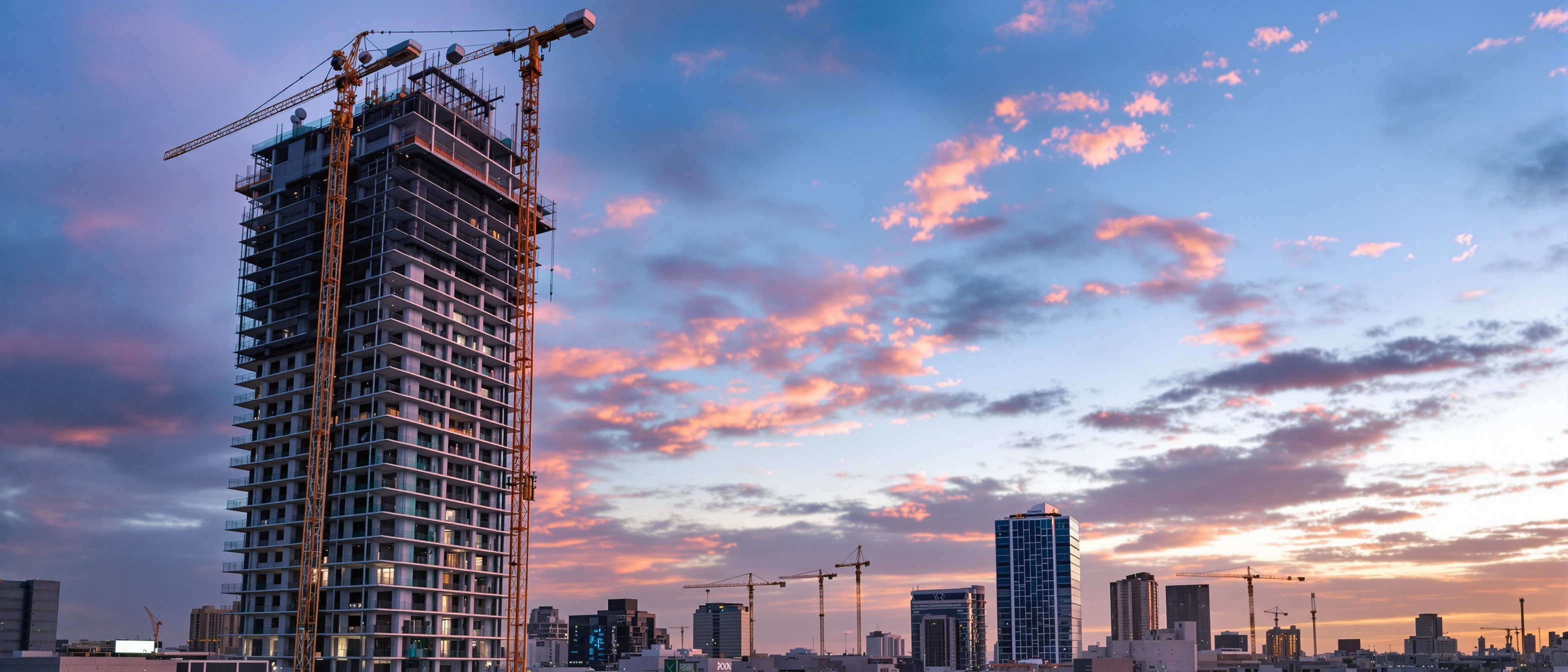
A massive new 20-story police surveillance center, known locally as the "Sentinel Tower" or "Torre Centinela," is nearing completion in downtown Ciudad Juarez, and it has become the latest flashpoint in an increasingly bitter political battle between municipal and state authorities. The project, which represents one of the largest security infrastructure investments in the city's history, has divided politicians, sparked public debate, and raised fundamental questions about the future of law enforcement in Mexico's largest border city.
The Tower That Divides a City
Rising prominently above the downtown Juarez skyline, the Sentinel Tower has become impossible to ignore—both physically and politically. The structure, which will house the state's most advanced surveillance and security coordination center, features cutting-edge technology including hundreds of monitoring stations, real-time video feeds from thousands of cameras across the city, artificial intelligence-powered threat detection systems, and a command center designed to coordinate responses to emergencies and criminal activity.
State officials have championed the project as a transformative investment in public safety. Governor Maria Eugenia Campos Galvan's administration has positioned the tower as evidence of the state government's commitment to combating crime and protecting citizens. According to state security officials, the facility will enable unprecedented coordination between various law enforcement agencies, allowing for faster response times and more effective crime prevention strategies.
However, not everyone shares this optimistic assessment. Mayor Cruz Perez Cuellar has emerged as the tower's most vocal critic, using increasingly harsh language to describe what he views as a misguided and wasteful project. In recent public statements, the mayor has called the surveillance center a "piece of junk" and questioned whether the massive investment will actually improve security for Juarez residents.
The Sentinel Tower will house one of Mexico's most advanced security coordination centers
Mayor's Scathing Criticism Sparks Backlash
Mayor Perez Cuellar's criticism of the Sentinel Tower has been both persistent and pointed. In a series of press conferences and social media posts, the mayor has argued that the state government's priorities are misaligned with the actual security needs of Juarez residents. He has questioned the cost-effectiveness of the project, suggested that the money could have been better spent on street-level policing and community programs, and accused state officials of pursuing a flashy project that looks impressive but may not deliver meaningful results.
"What good is a tower full of cameras if we don't have enough police officers on the streets?" the mayor asked during a recent press conference. "The people of Juarez need real security, not a monument to surveillance. This is a piece of junk that will do nothing to stop the criminals who terrorize our neighborhoods."
The mayor's comments have drawn sharp responses from state officials, who accuse him of politicizing public safety for electoral gain. State Security Secretary Gilberto Loya has urged the mayor to stop using security issues as political weapons and to work collaboratively with state authorities to protect Juarez residents. In a pointed statement, Loya suggested that the mayor's criticism undermines public confidence in law enforcement and could actually make the city less safe.
"Security should not be a political football," Loya stated. "The Sentinel Tower represents a serious investment in protecting the people of Juarez. Instead of tearing down these efforts, the mayor should be working with us to ensure this facility achieves its full potential. His irresponsible comments only serve to divide our community when we should be united against crime."
The Technology Behind the Tower
Beyond the political controversy, the Sentinel Tower represents a significant technological leap for law enforcement in the region. The facility will integrate multiple surveillance and communication systems that have previously operated independently, creating what officials describe as a "unified security ecosystem" for the entire metropolitan area.
At the heart of the system is a network of over 5,000 high-definition cameras positioned throughout Ciudad Juarez. These cameras, many equipped with facial recognition and license plate reading capabilities, will feed real-time video to the tower's command center. Artificial intelligence algorithms will analyze the footage, automatically flagging suspicious activities and alerting operators to potential threats.
The tower will also serve as the central hub for emergency communications, coordinating responses between municipal police, state police, federal authorities, and emergency medical services. Officials claim this integration will dramatically reduce response times and improve coordination during major incidents.
Thousands of cameras across Juarez will feed into the Sentinel Tower's monitoring systems
Public Opinion Remains Divided
The political battle over the Sentinel Tower reflects deeper divisions within the Juarez community about how best to address the city's persistent security challenges. Residents interviewed about the project express a wide range of opinions, from enthusiastic support to deep skepticism.
Supporters of the tower argue that modern technology is essential for combating sophisticated criminal organizations. They point to successful surveillance programs in other cities and suggest that the investment will pay dividends in reduced crime rates and improved quality of life. Many business owners, in particular, have expressed hope that enhanced security will attract investment and tourism to the city.
Critics, however, raise concerns about both effectiveness and privacy. Some residents question whether surveillance technology alone can address the root causes of crime, including poverty, lack of economic opportunity, and corruption within law enforcement agencies. Others worry about the potential for abuse, expressing concerns that the surveillance infrastructure could be used to monitor political opponents or ordinary citizens rather than criminals.
"I want to feel safe in my city, but I'm not sure a big tower full of cameras is the answer," said Maria Elena Gonzalez, a longtime Juarez resident. "What we need is police we can trust, jobs for young people, and communities where neighbors look out for each other. Technology can help, but it's not a magic solution."
Historical Context: Security in Juarez
The controversy over the Sentinel Tower must be understood within the broader context of Juarez's complex security history. The city experienced devastating violence during the height of the drug war in the late 2000s and early 2010s, when it was briefly considered one of the most dangerous cities in the world. While security has improved significantly since those dark years, crime remains a persistent concern for residents and a central issue in local politics.
Various approaches to security have been tried over the years, with mixed results. Federal interventions, military deployments, police reforms, and community programs have all been implemented at different times. The Sentinel Tower represents the latest attempt to leverage technology as a force multiplier for law enforcement, but skeptics note that previous technological investments have not always delivered promised results.
The political dimension of the current controversy also reflects ongoing tensions between different levels of government in Mexico. Municipal, state, and federal authorities often have competing priorities and different political affiliations, leading to conflicts over resources, jurisdiction, and credit for security improvements. The Sentinel Tower has become a symbol of these broader institutional tensions.
What Happens Next
As the Sentinel Tower nears completion, attention will shift from construction to implementation. State officials have announced plans for a formal inauguration ceremony, though it remains unclear whether municipal authorities will participate given the current political tensions. The true test of the facility will come in the months and years following its opening, as residents and officials alike evaluate whether the massive investment translates into meaningful improvements in public safety.
For now, the tower stands as both a physical landmark and a political symbol—representing different things to different people. To supporters, it embodies hope for a safer future and demonstrates government commitment to protecting citizens. To critics, it represents misplaced priorities and the triumph of flashy technology over substantive reform. To most Juarez residents, it remains to be seen whether this controversial project will live up to its promise or confirm the skeptics' doubts.
What is certain is that the debate over the Sentinel Tower reflects fundamental questions about security, governance, and the future of Ciudad Juarez—questions that will continue to shape political discourse and public policy for years to come. As the city watches and waits, the tower rises above the skyline, a constant reminder of both the challenges Juarez faces and the ongoing struggle to find solutions that truly serve its people.